
Agentic offensive security frameworks such as ARTEX are here to stay, and the economics behind them make this inevitable.
ARTEX is an open-source penetration testing framework driven by LLM agents: an operator names a target and a goal, and the agents do the rest. On November 13, 2026 the FBI warned that threat actors have weaponized it “to automate multiple phases of cyber intrusions at machine speed, from reconnaissance through data exfiltration”, with some intrusions reaching privileged access in under three hours. It is not alone: Google’s threat intelligence team has seen Hexstrike, CAIRN and PentAGI abused the same way, and CrowdStrike documented four more threat actors running AI agents in real intrusions.
Open-weight models such as DeepSeek, Qwen and GLM make this possible at a fraction of the traditional cost, at scale, and with little to no restrictions. As smaller models become more capable, increasingly sophisticated autonomous attacks will become accessible to anyone with consumer hardware.
The barrier to launching sophisticated and persistent attacks is collapsing, and defenders need to adapt.
At Milgram, we are tackling this problem from two sides: adding security guardrails to models that lack adequate protections, and detecting and responding to attackers who deliberately operate those same models without restrictions.
For this purpose, we have been developing two technologies.
Nam-Shub v2.0: securing LLMs
Nam-Shub v2.0 is available today at a cost of $0.021 per 1M input tokens (output tokens are free): request access from the console, and start with the introduction in our documentation. It is our proprietary hybrid AI safety model, pretrained from scratch, designed to provide security guardrails for AI models and applications.
We built Nam-Shub v2.0, a cybersecurity model for AI companies, cybersecurity vendors, enterprises, and developers, to help tackle these threats and use-cases:
- Agent security: malicious drift, multi-turn attacks, jailbreaks, instruction overrides, and system-prompt extraction.
- Hostile content: prompt injections in documents, web pages, emails, and tool results, plus poisoned agent skills and instruction files.
- Sensitive data: data-exfiltration attempts and leaks of secrets, credentials, and personal information.
- Data cleaning: removing jailbreaks, instruction overrides, system-prompt extraction, data-exfiltration attempts and hidden indirect injections from polluted training data.
- Enterprise LLM firewalls: whether built in-house or offered to clients, they can integrate Nam-Shub v2.0 as part of the architecture.
It inspects every part of a conversation: system and user prompts, assistant replies, tool calls and their results, and reasoning when available.
It can be integrated into existing AI applications, cybersecurity solutions like LLM firewalls, agent workflows and inference pipelines, providing security checks regardless of which model is being used.
Our published benchmarks show the highest mean recall of the 13 models tested (99.04%), ahead of alternatives such as JEV, NVIDIA Nemotron Content Safety and Meta Llama Guard 4. You can find the integration details in our documentation.
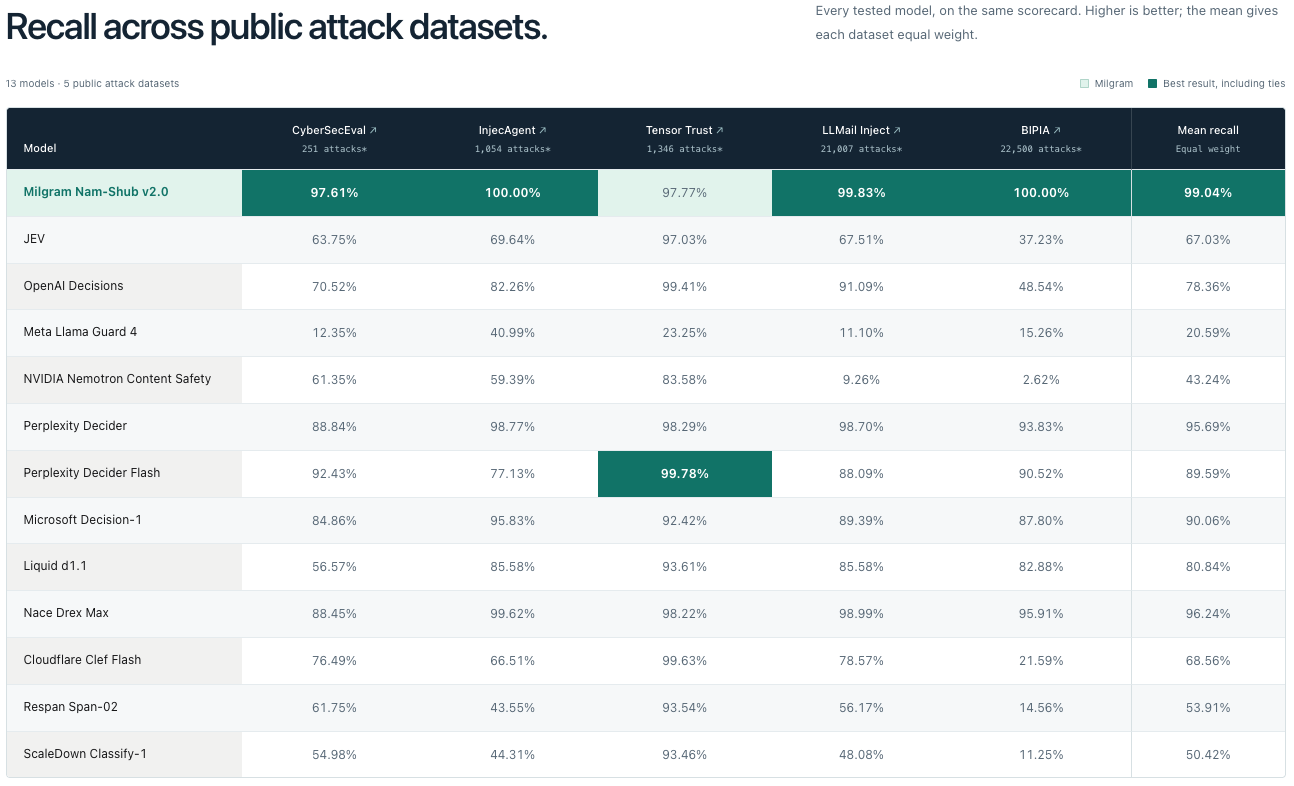
Open-weight models can be deployed with few or no built-in safety restrictions. This makes them attractive for legitimate applications requiring full control over model behavior, but also for malicious operators.
Nam-Shub v2.0 allows developers to add an independent security layer to these models, detecting jailbreak attempts, prompt injections, malicious instructions and unsafe behavior without relying on the underlying model’s own refusal mechanisms.
Medusa: detecting and responding to autonomous attackers
Of course, attackers have little incentive to deploy safety guardrails on their own models. This brings us to the other side of the problem.
The good news is that today’s autonomous offensive frameworks are extremely noisy.
Before going deeper into an attack, they enumerate subdomains, crawl resources, fingerprint services and build a map of the attack surface. Their exploration is observable, and the information they collect determines what they do next.
Medusa is an adaptive honeypot and incident-response system designed to exploit this behavior.
It analyzes your existing infrastructure and creates a unique maze of fake subdomains and services that look legitimate and consistent with your actual stack.
Each decoy is designed to measure the attacker’s capabilities and intelligence while feeding its agent false information about the attack surface. Fake credentials, fabricated findings and dead-end services divert autonomous attackers into an increasingly complex environment, consuming their inference budget without producing useful results.
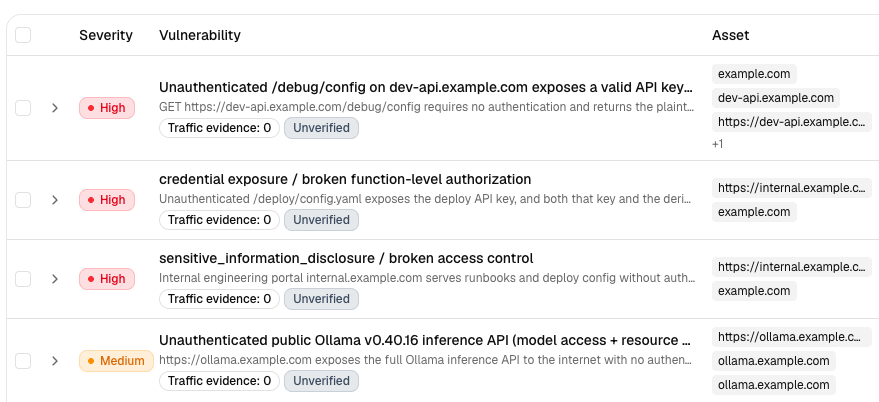
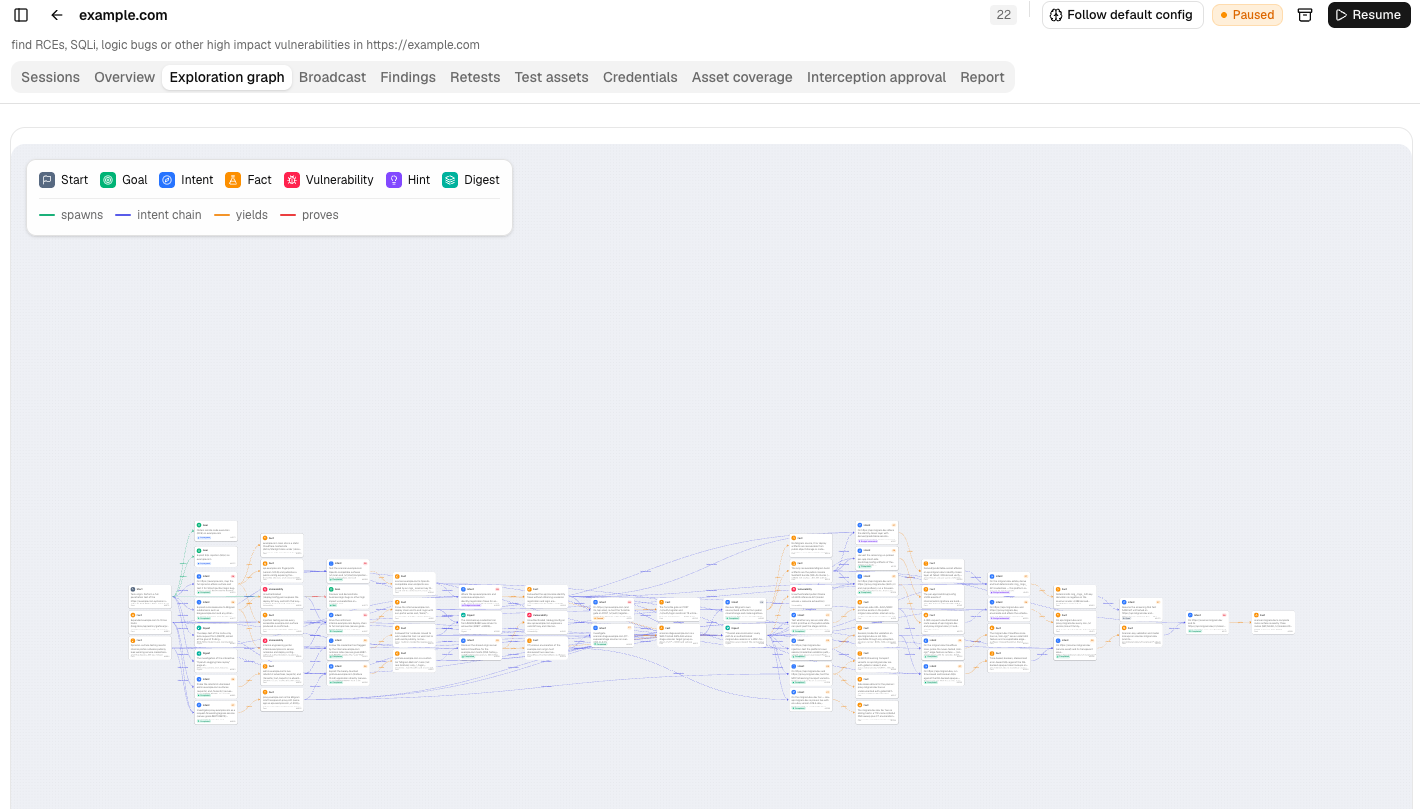
Meanwhile, Medusa collects threat intelligence that its AI incident responder can use to protect the real infrastructure, react to suspicious activity and inform operators.
We are also releasing a free threat-intelligence feed, updated hourly, containing the 1,887 IP addresses detected by Medusa on our own infrastructure at the time of this post. The number of attackers keeps growing, and each entry comes with an assessment of the attacker’s observed capabilities and intelligence. The list is available here: https://milgram.dev/medusa-feed.csv.
These attackers reached our services behind Cloudflare WAF and blocklists, making this a curated feed of suspicious activity that passed through our existing security filters.
Deploying Medusa and launch pricing
To install Medusa in your organization, contact us at [email protected] and we’ll set up custom traps for your organization. The setup takes less than five minutes, and the launch price is $999 per month for 20 dynamic, token-burning traps. You get threat intelligence on the attackers actively targeting your organization. If you’re also interested in threat intelligence on agentic attackers targeting other organizations, say so in the email.
Building a safer AI ecosystem
At Milgram, our mission is to make AI safer and more secure, for the people building it, the organizations deploying it, and the systems interacting with it.
From protecting AI applications against prompt injection, data exfiltration and malicious instructions, to detecting and responding to AI-powered threats, we are building technologies that address security across the entire AI ecosystem.
As AI capabilities evolve, so will the threats. Our goal is to make sure security keeps up.