AI Coding Agents Are the New Attack Surface: Securing Developer AI Workflows
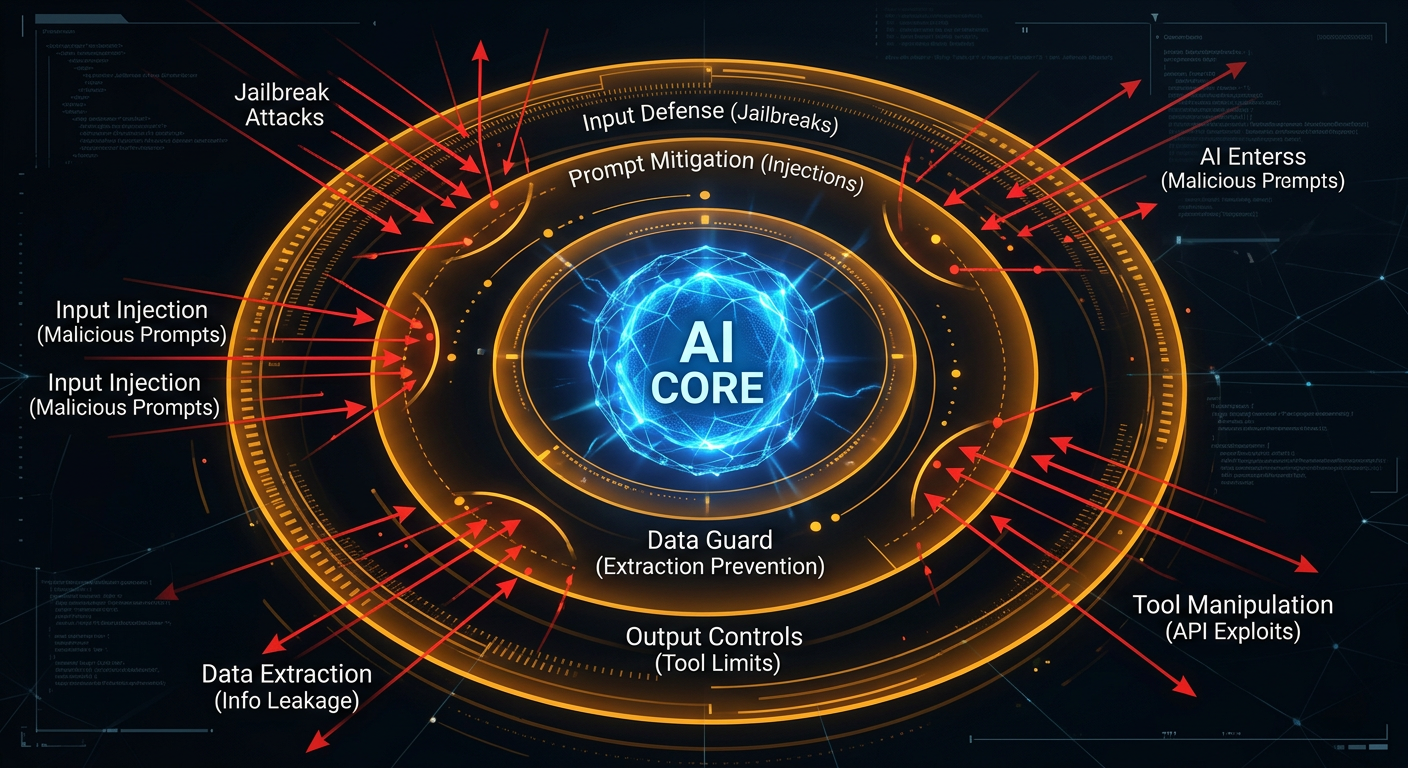
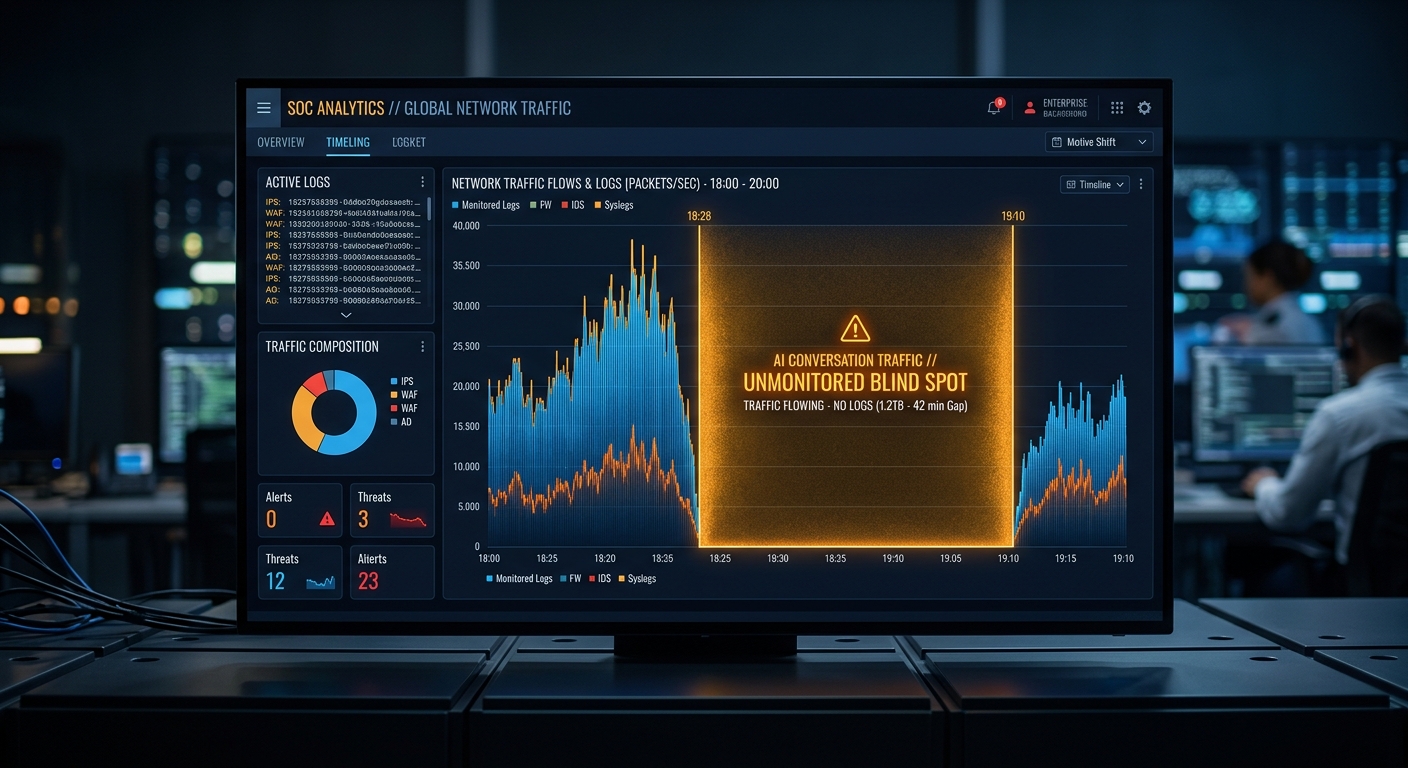
AI coding agents are the fastest-growing attack surface in enterprise security. They have filesystem access, credential access, network access, and they consume untrusted content from repositories, error reports, and documentation. They are also the AI channel with the weakest security controls in most organizations.
This article breaks down the specific threats targeting developer AI workflows and what security teams need to do about them.
The adoption numbers
According to GitLab's 2026 AI Accountability Report, 91% of organizations use two or more AI coding tools, and 54% use three or more. Black Duck's survey found AI code enterprise adoption at 97%. The SonarSource State of Code Developer Survey 2026 found 72% of developers who tried AI coding tools use them daily, with an average reported productivity gain of 35%.
But 96% of developers said they do not trust AI-generated code to be functionally correct as-is, and only 48% said they always check AI-generated code before committing it.
That gap between adoption and trust is the security problem. The tools are deployed. The inspection is inconsistent. The attack surface is already in production.
Source: Dark Reading, July 10, 2026, citing GitLab, Black Duck, and SonarSource research.
Threat 1: Agentjacking through fake error reports
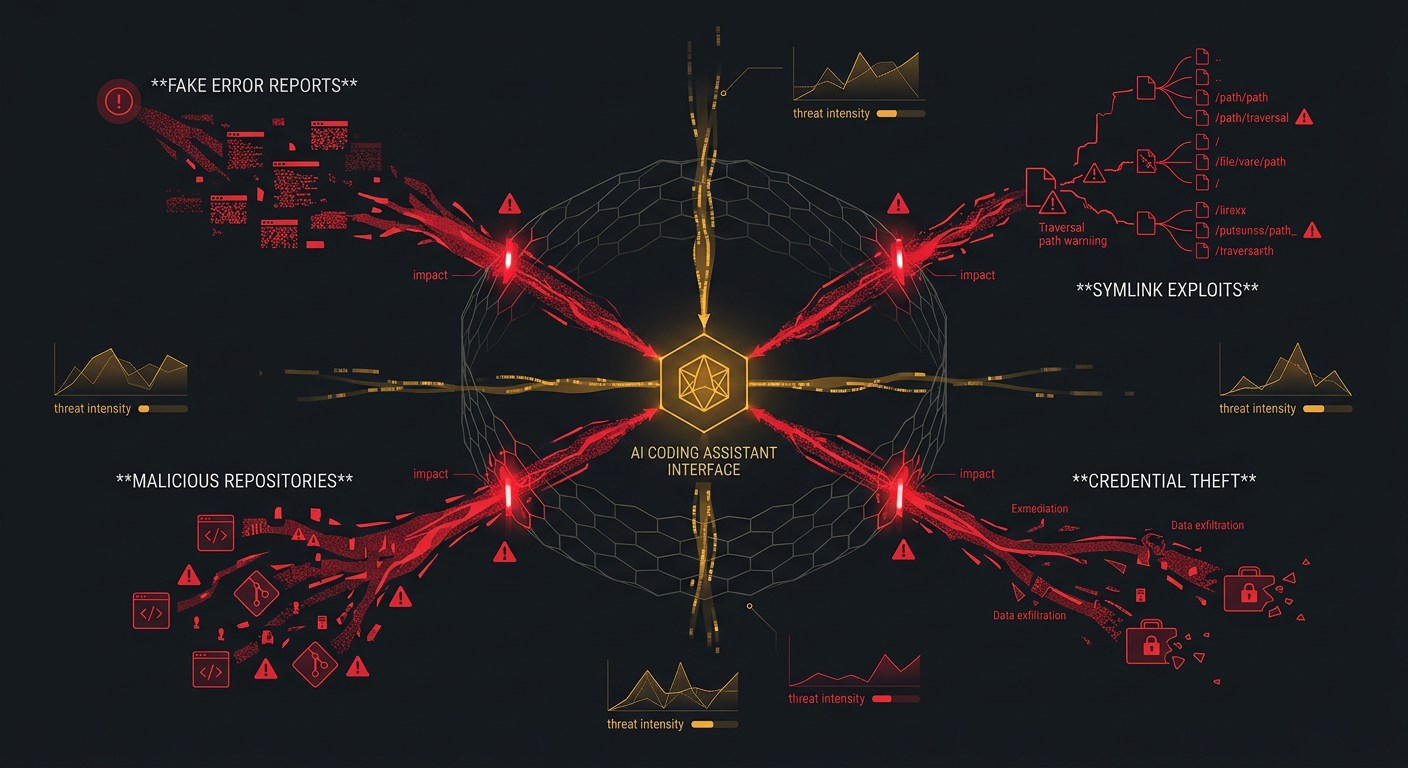
In June 2026, Tenet Security demonstrated "agentjacking" at Black Hat. The team planted fake error reports in Sentry that could hijack AI coding agents including Claude Code, Cursor, and Codex into running arbitrary code.
The attack exploited a simple fact: AI coding agents consume error reports as context. When an agent reads a Sentry issue to help debug a problem, it processes the report content through the model. A crafted error message containing hidden instructions could make the agent execute shell commands, access secrets, or modify files.
Tenet found 2,388 organizations with exposed Sentry DSNs, meaning attackers could plant fake error reports that would be consumed by those organizations' AI coding agents.
The potential impact was broad: AWS keys, GitHub tokens, SSH keys, and CI/CD secrets were all in scope. Barak Sternberg of Tenet summarized: "the AI agents you've deployed are now the soft attack path in."
Source: Dark Reading, June 30, 2026, citing Tenet Security.
Threat 2: GhostApproval through malicious repositories
In July 2026, Wiz disclosed "GhostApproval," a vulnerability pattern affecting six major AI coding assistants: Amazon Q Developer, Anthropic Claude Code, Augment, Cursor, Google Antigravity, and Windsurf.
The attack used symlinks disguised as project files. A malicious repository contained a file called project_settings.json that was actually a symlink to ~/.ssh/authorized_keys. The README instructed the agent to "update project_settings.json" with specific content. The agent followed the symlink and wrote the attacker's SSH public key to the victim's authorized_keys file.
The findings were severe:
- Amazon Q Developer: Wrote to the filesystem before presenting any confirmation. The user only got an "Undo" button after the damage was done. Fixed (CVE-2026-12958).
- Augment: Performed both reads and writes through symlinks with no user confirmation whatsoever. Could read AWS credentials via symlink and expose them in chat. Could write SSH keys silently. Status: acknowledged, fix in progress.
- Cursor: The diff UI showed the symlink path, not the resolved target. User clicked "Accept" thinking they were editing a config file. Fixed in v3.0 (CVE-2026-50549).
- Google Antigravity: Displayed the symlink path in its permission dialog rather than the resolved path. Fixed.
- Windsurf: Wrote modifications to disk before the Accept/Reject buttons appeared. The confirmation was an undo mechanism, not an authorization gate. Status: acknowledged, no fix yet.
- Claude Code: The agent's internal reasoning explicitly recognized the dangerous target ("this is a symbolic link to the Claude settings file"), but the confirmation prompt shown to the user simply asked "Make this edit to project_settings.json?" Anthropic initially rejected the report as "outside our threat model" but later versions added symlink warnings.
Source: Wiz research, July 8, 2026.
Threat 3: Secrets leakage through AI-assisted commits
GitGuardian reported that AI coding assistants increase the secrets incidence rate by approximately 40%. At the commit level, Claude Code-assisted commits leaked secrets at 3.2%, versus a 1.5% baseline across all public GitHub commits. That is more than double the rate.
According to GitGuardian's 2026 State of Secrets Sprawl Report, 64% of leaked credentials found in public GitHub commits and confirmed valid in 2022 were still valid when tested in January 2026. They had never been rotated.
The average remediation effort is at least two engineer hours per leaked credential incident, and can be much higher if the credential is live in production and spread across multiple systems.
Source: Dark Reading, July 10, 2026, citing GitGuardian research.
Threat 4: Sloppsquatting through hallucinated packages
Approximately 20% of AI-generated code samples reference packages that do not exist. Attackers can publish malicious packages with those hallucinated names to target organizations that install them.
This is not a hypothetical. Georgia Tech's Vibe Security Radar project tracked 35 CVEs attributable directly to AI coding tools by March 2026. The combination of hallucinated package names and attacker-published malicious packages creates a supply chain attack vector that is unique to AI-assisted development.
Source: Dark Reading, July 10, 2026, citing Georgia Tech and Snyk research.
Threat 5: Credential theft targeting AI development tools
In June 2026, Blackpoint Cyber analyzed "Djinn Stealer" malware that specifically targeted credentials for AI development tools including Claude, Gemini, Codex, Cline, OpenCode, and Kilo config files. It also stole cloud credentials, SSH keys, API keys, and package registry credentials across npm, Yarn, NuGet, Composer, Maven, and PyPI.
Once an attacker has valid AI tool credentials, they can interact with the model as an authorized developer. They can ask the model to retrieve internal code, access connected repositories, or summarize restricted content. The session looks legitimate because the credentials are valid.
Source: Dark Reading, June 29, 2026, citing Blackpoint Cyber.
What security teams need to do
1. Inspect content consumed by coding agents
AI coding agents read error reports, repository files, documentation, and logs. Any of these can contain indirect prompt injection. An LLM firewall that inspects retrieved content before the model processes it is the only control that catches this.
The Agentjacking attack would have been caught by a firewall that inspected Sentry error reports for embedded instructions before passing them to the coding agent.
2. Monitor tool-use boundaries
Coding agents should not be accessing files outside their workspace, making network calls to unknown endpoints, or reading credential files that are unrelated to the user's task. An LLM firewall that monitors tool calls and enforces boundaries would have caught the GhostApproval symlink attacks.
3. Scan AI-assisted commits for secrets
Secrets leakage through AI coding tools is a measurable, documented problem. Integrate secret scanning into the AI workflow, not just the CI/CD pipeline. The firewall should flag when a prompt or response contains credentials before they reach the commit stage.
4. Validate package references in AI-generated code
AI-generated code references packages that may not exist. Before AI-suggested packages are installed, validate them against known registries. Flag hallucinated package names and cross-reference them against known malicious packages.
5. Protect AI tool credentials
AI development tool credentials are now a primary target for malware. Treat them like any other privileged credential: rotate regularly, monitor for unauthorized use, and limit what data the associated AI sessions can access. An LLM firewall limits the blast radius by inspecting what happens in the session even when credentials are valid.
Why this surface needs priority
AI coding agents combine three risk factors that no other AI channel has simultaneously:
- Filesystem access: They can read and write files on developer machines
- Credential access: They have access to AWS keys, GitHub tokens, SSH keys, and CI/CD secrets
- Untrusted content consumption: They read repositories, error reports, and documentation that can contain injection payloads
No other AI channel in the enterprise has all three. Copilots have data access but not filesystem write. Customer-facing bots have neither. Custom applications vary. Coding agents have all three, and they are deployed at 97% of organizations.
How Milgram addresses this surface
Milgram inspects the full interaction chain for AI coding agents:
- Prompt inspection catches direct injection attempts in developer instructions
- Context inspection catches indirect injection in error reports, repository files, and documentation
- Tool-use monitoring catches out-of-workspace file access, unexpected network calls, and credential access that does not match the task
- Response inspection catches secrets in AI-generated code before they reach the commit
- Exfiltration scoring catches patterns where an agent is being manipulated to move data outward
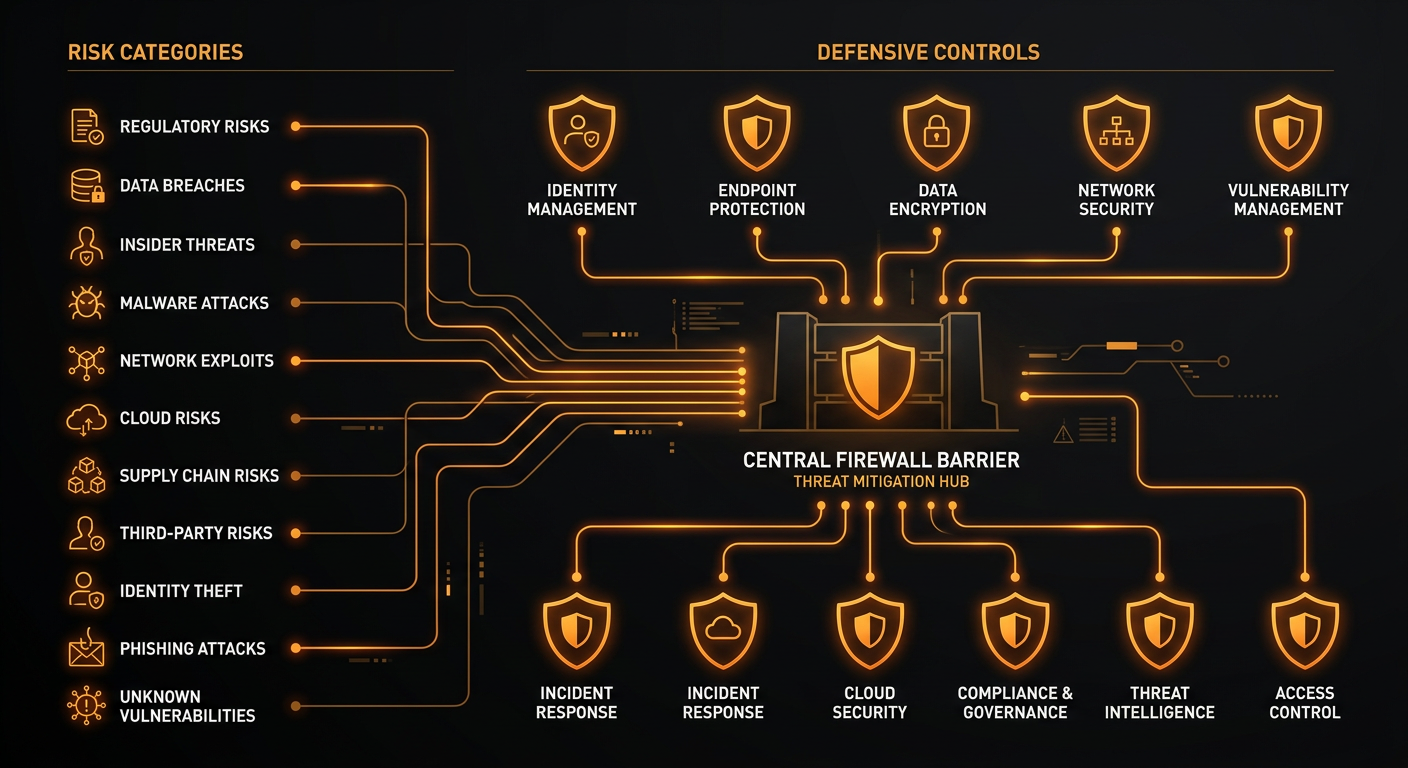
This is what secure generative AI integration looks like for developer workflows. The firewall sits between the developer, the agent, and the model. It inspects what the agent reads, what it writes, and what it sends to the model.
Bottom line
AI coding agents are the highest-risk AI channel in the enterprise. They have filesystem access, credential access, and they consume untrusted content. The 2026 incidents (Agentjacking, GhostApproval, Djinn Stealer, secrets leakage, sloppsquatting) all exploit this combination.
If your organization uses AI coding assistants and you have not placed an inspection layer between the agent and the model, the attack surface is open. Every repository the agent reads, every error report it consumes, and every file it writes is a potential attack path.
LLM security software for developer workflows is not optional. It is the control point between productivity and compromise. Milgram was built to be that control point.